Thoughts to Ponder 795
The Tragic Loss of a Divine Law
In Converting to Judaism, Parashat HaShavua and Parashat Ki Tisa
[God] said: “I hereby make a covenant. Before all your people I will work such wonders as have not been wrought on all the earth or in any nation; and all the people who are with you shall see how awesome are the Lord’s deeds which I will perform for you.” (Shemot 34: 10)
There came out among the Israelites a man whose mother was Israelite and whose father was Egyptian. And a fight broke out in the camp between that half-Israelite and a certain Israelite. The son of the Israelite woman pronounced the Name in blasphemy, and he was brought to Moshe…and he was placed in custody, until the decision of the Lord should be made clear to them… And they took the blasphemer outside the camp and pelted him with stones. The Israelites did as the Lord had commanded Moshe. (Vayikra 24:10-23)
These texts tell us about two major events in the days of the Torah—one of great joy, and one of great tragedy; one about the unprecedented Divine revelation at mount Sinai, and one about a tragic event that happened after this ultimate event.
The incident of the blasphemer is the first time we hear about a child of a mixed marriage who walked with the children of Israel through the desert before entering the land of Israel. This episode ended in total disaster, the blasphemy of the Name, and a death penalty. What’s more, it ended in the loss of a potential Divine law!
What happened?
According to the commentary of Rabbi Samson Raphael Hirsch (under 24:10) there was doubt whether the child of this mixed marriage was Jewish. Although children who are born of a Jewish mother and a non-Jewish father are today considered to be Jewish, this was not the case before the giving of the Torah. Rather, children of mixed marriages were considered non-Israelites unless both parents were Israelites. Although this story takes place after the revelation at Sinai, the child was probably born before that time, and the people at the time believed that such a child was not one of them, even though his mother was of the Children of Israel.
As such this son was confronted with a major dilemma. He had experienced the splitting of the Reed Sea, the giving of the Torah, including hearing God’s voice at Sinai, and the thunder and lightning accompanying this Divine revelation. No doubt he felt that he was part of the tribe, just like everybody else, only to be told by the community of Israelites that he was not.[1]
This must have caused considerable pain. Could it be that he started a fight with the others (See 34:12) in an attempt to convince them that he was an Israelite? Perhaps when he did not succeed, he cursed God for what he believed was a great injustice.
Among the two million Israelites who stood at Sinai, he was the only one (that we know of, at least) who was specifically mentioned as having been born from a mixed marriage. It’s quite possible that he was seen by others as an illegitimate child, born in sin, similar to the case of the mamzer.
While he is the only one mentioned, there must have been many such children. The Torah mentions the “mixed crowd” that joined the Israelites when they left Egypt (Shemot, 12:38). Thus, the blasphemer may have been indicative of a problem faced by an entire sector of society in the Sinai desert.
This man must have asked himself how he could be a witness to this unprecedented Divine revelation—and yet have no part in all of this? Was not anybody who experienced the giving of the Torah ipso facto a Jew? After all, how could one remain a non-Jew after such a radical transformative religious experience?
Did not the experience at Sinai itself cause all those present to be transformed into Jews—the ultimate “conversion”? No further proof for Jewishness should be needed! Those who did not stand at Sinai, in later days, needed Jewish parents to prove their Jewishness. But not those who stood at Sinai!
An appropriate response to injustice
Still, cursing God was the wrong response, and a major transgression.
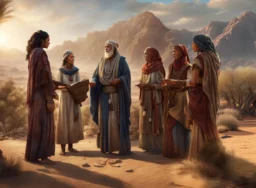
The son of this mixed marriage should have done what the daughters of Tzelofchad did years later (Bamidbar 27:6-9) These sisters discovered that their father, who had passed away without a son, was to have no part in the land of Israel when it was divided. His name would be forgotten among the people of Israel, and so they went to Moshe to protest and plead their case before God, because they felt that they and their father had been wronged.
We read:
Moshe brought their (the daughters) claim before God. And God said to Moshe: the daughters of Tzelofchad are right. You shall surely give them a possession of inheritance… and you shall cause the inheritance of their father to pass over to them. [2]
Here something extraordinary happened!
Instead of cursing God, the daughters of Tzelofchad forced God’s hand! And by doing so, they initiated a Divine law: When daughters have no father or brothers to take care of them, they will have part in the division of the land of Israel!
This is an entirely new law!
What is astonishing is that had they not protested, the law concerning the inheritance of daughters would not have been changed, and they would not have inherited! This Divine law would not have been handed down to all future generations.
A most profound concept is established in this story: God only grants us a change in the Divine law if we fight for it.
The reason is obvious: Justice does not exist in the abstract. We must be co-creators with God in Divine justice. But that is only possible when human beings take the initiative. Only then will there be a Divine response. And only when we see the need and fight for it, will we receive God’s law.
A missed opportunity for a more just law
The daughters of Tzelofchad were convinced that God is just. But they knew that they needed to ask for this justice. There was no reason to curse God. The reverse was true; they went to “converse with” God because they were convinced that their complaint was just and that they would be heard.
And so, in the case of the blasphemer: he should have pleaded his case before God. Because his cause was just, there is no doubt that God would have responded that, yes, he was certainly Jewish.
This idea is mindboggling: Human beings are able to create Divine law!
This means that the text of the Divine Torah is human in the sense that it is the human condition and human requests that determine what will appear in the Divine text and what will not. Rather than human beings following the text, the text sometimes follows human beings.[3]
But if we fail to take the initiative, the Torah fails to acknowledge our requests.
Laws of justice are a response to human needs; they are not a priori assumptions about human nature.
In the case of the blasphemer, he should have argued that children with one Israelite parent should also be included in the Children of Israel. After all, is it not entirely unfair that such children are left out? Their forefathers also stood at Sinai and heard the voice of God!
The Divine response to human needs
Further: is it not conceivable that some other Divine laws which seem to be unfair would have been different had people protested against them and sought God’s intervention? But God waited, and human beings failed Him and never asked nor protested.
Perhaps this is also true about the law of the mamzer. Just like the law of the ben sorer u-more, the rebellious son[4] was declared inoperable, so it should have been the case with the mamzer law.
And what about women who might want to give a Get, a bill of divorce, to their husbands? Had they organized a massive protest movement against the fact that only their husbands were able to give them a Get but not the reverse, perhaps they would have had their way, and God would have agreed. (In fact, in the face of such inequality, should not the men themselves be leading the protest movement on behalf of the women?)
So God waited, but no protest was heard. And consequently, a more noble and just Divine law failed to come into existence.
Such is the case when we do not speak up before God.
It is important to emphasize that with the “closing” of the text of Torah it is no longer possible to change the text—and its laws—as was still possible in the days of Moshe and the daughters of Tzelofchad. This can only be done by way of the Oral Torah, and only when the majority of Jews agree with such changes. Such agreement would require the re-institution of the great Sanhedrin of 71 Sages. Alas, such as institution has not yet been realized!
I’m aware that these are far-reaching suggestions, but as can be seen from the case of the daughters of Tzelofchad, the Torah was not yet a “closed text” in those days. It was still “in the making”, and God was willing to amend His text accordingly.
But alas nobody spoke up in the above cases. Only in later days did the sages, via the Oral Torah, take the initiative, as can be seen in the many cases in the Talmud. While they believed in the complete divinity of the written Torah, they realized that this Divine text was meant as a point of departure, not as a destination.[5]
As such, the tragic event of the blasphemer could have been prevented! And the Torah would have been even more noble. There is a lesson here for us in our day.
Notes:
[1] See also Sifra, Emor,235.
[2] A similar situation happened when some Israelites could not bring the korban Pesach, the special Pesach offering, because they were ritually “unclean”. They complained to Moshe, and God told them that they could bring this offering a month later when they would be “clean” again. This is called Pesach Sheni, Bamidbar, 9:6-14.
[3] See my book “Jewish Law as Rebellion, Urim Publications, chapter 27 (soon available in Hebrew, Yediot Acharonot): On the Law of the Mamzer: The Theology of the Halachic Loophole and the Meaning of Torah min ha-Shamayim, pages 288-299. where I discuss this issue in great length.
[4] Sanhedrin, 71a
[5] See Jewish Law as Rebellion, page 294.

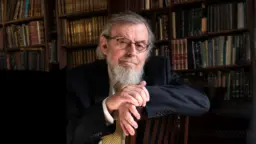
Rabbi Nathan Lopes Cardozo
Rabbi Dr. Nathan Lopes Cardozo is the Founder and Dean of the David Cardozo Academy and the Bet Midrash of Avraham Avinu in Jerusalem. A sought-after lecturer on the international stage for both Jewish and non-Jewish audiences, Rabbi Cardozo is the author of 13 books and numerous articles in both English and Hebrew. He heads a Think Tank focused on finding new Halachic and philosophical approaches to dealing with the crisis of religion and identity amongst Jews and the Jewish State of Israel. Hailing from the Netherlands, Rabbi Cardozo is known for his original and often fearlessly controversial insights into Judaism. His ideas are widely debated on an international level on social media, blogs, books and other forums.