Thoughts to Ponder 179
Toward a Solution
Israel's dilemma in the wake of the withdrawal from Gaza
In Contemporary Issues, Israel & Zionism and Parashat Ha'azinu
July 24, 2005
The interpretation of history is a delicate matter, particularly when one tries to understand the present. In his work Clio, Charles Péguy (1873–1914) said that it is impossible to write ancient history because we lack source materials, and it is impossible to write modern history because we have too many. This applies even more to religious people. Trying to understand the hand of God behind historical and present events is like putting one’s ear to a seashell and listening to a perpetual murmur coming from waves far beyond the shore. Since the present is rolled up into countless impenetrable folds, any attempt to understand it seems to be doomed to failure from the start.
Our sages teach us that one may, with caution, use the Torah as a guide to decipher certain events. Although this undertaking carries great risks, it may give us some understanding and grant us some guidance to deal with our current challenges.
The debate about the Gaza withdrawal shows that both sides reflect competing nightmares. Opponents of the withdrawal, including top military experts, fear that the Palestinians will be encouraged to start a new, even more perilous intifada since their earlier terrorist attacks were most successful and forced Israel out. Supporters of the withdrawal are terrified that Israel will become a pariah state in which the army will be forced to violate its basic ethical standards and international pressure will grow for a one-state solution. Both nightmares are highly realistic. Each side has strong, convincing arguments. Opponents wonder how the Israeli government can prevent Gaza from becoming a terrorist state, especially when Egypt is entrusted with policing the Philadelphi corridor and the Palestinians possess a seaport and an airport. What will Israel do when rockets strike Ashkelon or even Ben Gurion Airport? Will it decide to reoccupy Gaza and northern Samaria? If so, there will be many more Israeli casualties and the withdrawal will have gained us nothing.
Those who support the withdrawal claim that it is impossible to keep millions of Palestinians under Israeli control. This will ultimately force Israel to expel them (a complete impossibility) or to continue to rule over them against their will and consequently be forced to give them full civil rights and liberties, which in the long run will sign Israel’s death warrant as a Jewish state.
As such it becomes clear that the Palestinian problem has become Israel’s catch-22, to which no solution seems to be possible. It seems that any solution will lead to a nightmare. From any angle, the Israeli government is confronted with a huge problem that will not go away.
In Parashat Ha’azinu (Devarim 32:20–21), the Torah discusses the severe consequences that the people of Israel will suffer if they do not live up to their religious and moral mission. God warns that in that case, He will withdraw His active and protective presence from the Jewish people. While introducing this possibility the Torah suddenly mentions the following scenario:
And I said: I will hide My face from them, and I will see what their end will be. They are a generation of confusion [or reversals], children in whom one cannot trust. They have aroused My jealousy with a non-god. They have angered Me with their nullities.
So I will cause them envy by a non-nation, with a scoundrel nation. I will provoke them and create resentment. (emphasis mine)
This extraordinary, surprising text seems to suggest that when Israel fails to live up to its religious and moral commitment, it will unwittingly cause the creation of a nation – a non-nation – that, without any historical claims, will appear from nowhere. It will provoke Israel through great resentment that Israel will not be able to escape. Only a return to Jewish values, religious commitment and a high standard of ethics will force this nation to stop wreaking havoc on the Jewish people.
Since there is little to no evidence that the Palestinians have any historical roots as a nation, one cannot escape the impression that the Torah may be sending a message to present-day Israel, warning it of the dire consequences it will suffer if it does not take care of its moral and spiritual condition.
The sudden and completely unexpected appearance of the Palestinian people, of which nobody had heard previously, has now become the focal point of much of the Middle East’s troubles and has made the security situation in Israel complicated and precarious. Many feel that it has jeopardized the Jewish claim to its homeland and that it tries to undermine the Jewish people’s capacity to live there in peace while destroying its credibility in the eyes of the world. In this new climate, any attempt by Israel to make peace is turned on its head and used to prove Israel’s aggressive intentions. The absurdity is so apparent that one is forced to look for reasons beyond the scope of politics.
It is difficult to deny that as Israel’s obsession to become a nation like all other nations has increased and more people have become less interested in their unique Jewish roots, its security issues have become more complex.
As calls come from some Israeli officials to replace Israel’s national anthem, “Hatikva,” with a non-Zionist text and to remove the Magen David from its flag, as Israeli academicians teach anti-Zionist, anti-Jewish texts and philosophies and Israeli society becomes more obsessed with Western hedonist culture with its new idols of money and sex, Israel is putting its very existence at risk. It is not at all surprising to see a severe increase of crime in Israeli schools and streets (something that for years was a non-issue) as Israel loses its Jewish identity – the only reason for its existence.
Still more painful is the realization that in the absence of a strong religious inspirational Israeli leadership, Israel falls victim more and more to its own undoing, believing that the de-judaizing of its people will be its salvation. It could make no greater mistake. While we fully realize that Israelis are not going to take up a religious lifestyle en masse, throughout history the Jewish people has always respected its tradition, culture and values, and been deeply proud of its Jewishness. This respect and pride are vanishing among many segments of society and are being replaced by a hollow and cheap Israelism that, if it is not stopped, will undermine the very existence of the State.
One is reminded of the prophet Yechezkel’s words:
As for what enters your mind, it shall not be. As for what you say: We will be like the nations, like the families of the land. But I will rule over you with a strong hand. I will make you pass under the rod and bring you into the bond of the covenant. Then you will know that I am the Lord. (20:32–38)
Yet here lies our greatest reason for optimism. If our interpretation is correct, the verses cited above prove that what is now happening to the Jewish people and to the State of Israel is not the result of random forces or political turmoil. They prove as clearly as can be that God is in charge and that His providence is at work through its very apparent absence. Therefore, the solution to Israel’s problems is easy to find. The people of Israel must rediscover their roots and realize that the covenant between God and the Jewish people is very much alive and must be kept. May God grant us that wisdom.

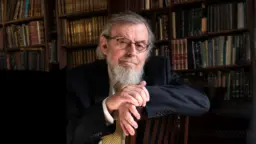
Rabbi Nathan Lopes Cardozo
Rabbi Dr. Nathan Lopes Cardozo is the Founder and Dean of the David Cardozo Academy and the Bet Midrash of Avraham Avinu in Jerusalem. A sought-after lecturer on the international stage for both Jewish and non-Jewish audiences, Rabbi Cardozo is the author of 13 books and numerous articles in both English and Hebrew. He heads a Think Tank focused on finding new Halachic and philosophical approaches to dealing with the crisis of religion and identity amongst Jews and the Jewish State of Israel. Hailing from the Netherlands, Rabbi Cardozo is known for his original and often fearlessly controversial insights into Judaism. His ideas are widely debated on an international level on social media, blogs, books and other forums.