Thoughts to Ponder 235
When God Is Hidden and Present at Once
When Moshe wrote the story of Bilam in the Torah—dictated to him by God—he must have been astounded. The incident, in which Balak king of Moav sought to curse Israel through the prophet Bilam, happened far from the Israelite camp. The delegation of Moabite princes, the Divine refusals and permissions, the speaking donkey, and the forced blessings instead of curses—all of it occurred hundreds of kilometers away and remained hidden from Moshe and the people until much later.
Why then is this story told at all, and in such detail? The danger had been averted. Bilam’s attempted curse never materialized. And even if it had, what effect would it have had? Only God can truly curse or bless.
Yet the Torah devotes an entire parasha to an event that no one knew about until long after the fact. Why?
The Silence of Thirty-Eight Years
More perplexing is when this episode occurred. According to the Torah’s timeline, there was a gap of 38 years between the rebellion of Korach and the death of Miriam. In that time, nearly nothing is reported. Rashi, commenting on Vayikra 1:2, states that, indeed, as a result of the sin of the spies, God did not speak to Moshe for 38 years.[1]
We cannot fathom the implications of this. There was no prophecy, no sign of Divine presence.[2] The people wandered in bewilderment, unsure of their fate, convinced perhaps that the Exodus had failed. God had become a Deus Absconditus—an absent God.
Due to sin of the spies, God had decided that nobody who had left Egypt would enter the land of Israel. The Tosafot records a chilling midrash on this; every year, on the Ninth of Av the Israelites would dig their own graves, lie down in them, and wait. In the morning, a voice would call out: “Let the living separate from the dead.” Until, finally, in the fortieth year, no one died. At first they assumed they had miscalculated. The were too traumatized to hope. Only when the full moon appeared did they realize that the decree had been lifted.[3]
These were years of hopelessness and horror. A whole generation died in the desert. Moshe must have wondered if the Exodus had been in vain. Perhaps, in those years, many came to believe that God did not exist at all.
Divine Silence vs. Divine Commotion
And yet, even as the Israelites were facing this Divine silence, hundreds of kilometers away, God was speaking to the prophet Bilam. Remarkably, the Sages suggest that Bilam may even have been a greater prophet than Moshe. [4]
Bilam had been hired by Balak, the king of Moab, to curse the Israelites as they traversed the desert. A curse would not have been difficult to actualize—the desert held hazards and terrors enough even without it. But try as he might, Bilam could not manage it. In the end, his curse was replaced by a blessing.
The irony is striking: while the Israelites felt cursed and abandoned, God was forcing their enemies to bless them.
This is the heart of the matter. Only much later, when God commanded Moshe to write the story of Bilam, did the people learn the truth, that while they experienced Divine absence, God had in fact been highly active on their behalf—but elsewhere.
What Is Hester Panim?
What does it mean for God to be “absent”? In strict monotheism, Divine absence is impossible. God is eternal and omnipresent. To say He has “disappeared” is a contradiction.
Rather, Hester Panim—the hiding of God’s face—means that God refrains from direct intervention. Events seem to unfold on their own, without any obvious miracles or challenges to the normal course of nature. But in reality, God remains deeply involved.
The Israelites could not perceive this involvement—but it was happening nonetheless. While silence prevailed in the desert, Divine activity flourished in Moav. There was absence on one side, and Divine commotion on the other; simultaneously.
Reading Jewish History Through This Lens
This paradox is essential to understanding all of Jewish history. At moments when God seems utterly absent, His presence may be revealed somewhere else.
During the Holocaust, miracles occurred amid the horror. Some miraculously escaped gas chambers. Others found strength and faith in impossible conditions. Divine intervention flickered, briefly, in a sea of devastation.
In recent Israeli history—including the current 2025 war with Iran and Hamas—we see this again. The government, fearing tens of thousands of casualties, prepared mass graves. Yet they were not needed. Pilots flew unchallenged across enemy skies, risking everything—and returned safely. Their missions succeeded against all odds.
And yet, in Gaza, lives are lost. Soldiers and civilians are dying. There is both Hester Panim and Giluy Panim—Divine concealment and Divine revelation—side by side.
A Story of Faith and Paradox
The story of Bilam teaches us that Divine absence is never absolute. Nor is there ever complete Divine intervention with no effort on the part of human beings. God’s presence is unevenly distributed in history. Some experience miracles. Others encounter silence.
This is a painful but vital truth. In the moment of crisis—when one asks, “Where is God?”—the answer may lie just out of sight. While we suffer in the here and now, elsewhere blessing unfolds.
Sometimes we Jews trade in open miracles, at other times in terrifying Divine absence.
In our private lives, we may feel that our lives are guided and encouraged by a Divine hand, while at other times, we may feel completely abandoned. Sometimes, we may even feel both simultaneously.
The fact that Bilam, despite his free will, was compelled to bless rather than curse, underscores this mystery. It reveals the paradox of human freedom and Divine control. Man speaks, yet God may override his words. Even curses may become blessings.
Between Faith and Absurdity
Living with this awareness is not easy. It demands faith of the highest order—the ability to see, or at least believe in, God’s hand even in tragedy. Only a few of us achieve this. Most of us waver between faith and doubt. The greatness—and tragedy—of humanity is that we exist suspended between these poles.
Albert Camus, the French philosopher, once wrote: “I do not believe in God, but I am not an atheist.” This enigmatic statement reflects the human tension between yearning for transcendence and confronting a world that often denies it.
But perhaps the ultimate test of our relationship with God is not whether we seek His kindness—but whether we seek Him.
Notes:
[1] Rashi on Vayikra 1:1-2. See also Seder Olam Rabbah ch. 8.
[2] It would appear that the daily supply of the manna was taken for granted as a natural occurrence.
[3] Tosafot on Taanit 30b, s.v. “ad.” This midrashic tradition describes the ritual of grave-digging during the 38 years of desert wandering.
[4] See Bamidbar Rabbah 14:20. Bilam’s prophetic level may have rivaled or even exceeded that of Moshe in certain ways.

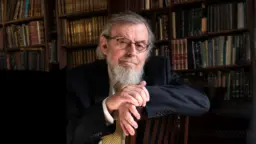
Rabbi Nathan Lopes Cardozo
Rabbi Dr. Nathan Lopes Cardozo is the Founder and Dean of the David Cardozo Academy and the Bet Midrash of Avraham Avinu in Jerusalem. A sought-after lecturer on the international stage for both Jewish and non-Jewish audiences, Rabbi Cardozo is the author of 13 books and numerous articles in both English and Hebrew. He heads a Think Tank focused on finding new Halachic and philosophical approaches to dealing with the crisis of religion and identity amongst Jews and the Jewish State of Israel. Hailing from the Netherlands, Rabbi Cardozo is known for his original and often fearlessly controversial insights into Judaism. His ideas are widely debated on an international level on social media, blogs, books and other forums.