Thoughts to Ponder 827
Yom HaShoah and the Future of the Jewish People
In The Jewish Year and Yom HaShoah
There is a major problem with Yom HaShoah. The problem is not with the day itself, but with its circumstantial consequences.
Since the Holocaust, we have erected memorials throughout the world. We have convened conferences on the Holocaust and we have encouraged our children to participate in the “March of the Living” to see the camps and crematoria.
Holocaust studies, books, and articles have proliferated, and universities offer programs to encourage further study.
All of this has cost millions of dollars, and without doubt all of it is of the greatest importance. Indeed, we must never forget what happened. We have an obligation to remind the world of the unprecedented evil that led six millions Jews—including more than one million children—to be brutally slaughtered because they were Jews.
All this is of the highest priority.
But there is an overriding question we need to ask ourselves: How does Holocaust remembrance help our young people want to stay Jewish? How will it lead them to see their Jewishness as a great privilege?
The Holocaust does not provide a positive and optimistic framework for Jews to lead Jewish lives. One cannot build the future of the Jewish people on the ashes of Auschwitz.
From a survival perspective, fear of another Holocaust has caused many Jews to assimilate to avoid such a fate for themselves, and even more so for their children. This, of course, ignores the historical reality of Nazi Germany, which took no account of assimilation or even conversion in murdering Jews.
What is of crucial importance is to create new paradigms for positive and joyful Jewish living—to show the uniqueness of the Jewish tradition, demonstrate how it has positively influenced all of mankind with its moral and ethical values. What is needed is an emphasis on the joy of being Jewish.
We need to show our children that to be a Jew is to live with a universal mission—a call for eternity that has kept us alive for nearly four thousand years. Despite all the inquisitions, pogroms, and the Holocaust with their mission to obliterate Jews and Judaism, we need to show that Judaism is indispensable to the world.
While important in its own right, fighting antisemitism is not an answer to assimilation. We need to bring an uplifting and transformative Judaism to our young people and turn being Jewish into an experience of moral and religious grandeur. We must show that Judaism ennobles the commonplace, endowing all worldly matters with hieratic beauty and transcending holiness.
We have to show our children that celebrating Shabbat is an overwhelming experience—an immersion in holiness amidst a world of consummate consumerism. We should inspire them to eat kosher as a protest against obsession with food. We should encourage prayer to remind us that not everything is in our power.
We should again become pioneers, as were our forefathers when they started Judaism, to tell the world that to live a life of great spiritual commitment is as vital as health. By living a Jewish life, we preserve the light for mankind’s future.
In every city in the world where there is a Holocaust memorial there should also be an exhibition hall of Jewish pride and practice—for Jews and Gentiles.
Israel was made to be a holy people. Let us live up to it.

Rabbi Nathan Lopes Cardozo
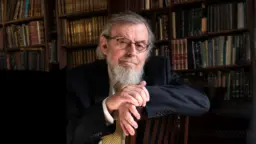
Rabbi Dr. Nathan Lopes Cardozo is the Founder and Dean of the David Cardozo Academy and the Bet Midrash of Avraham Avinu in Jerusalem. A sought-after lecturer on the international stage for both Jewish and non-Jewish audiences, Rabbi Cardozo is the author of 13 books and numerous articles in both English and Hebrew. He heads a Think Tank focused on finding new Halachic and philosophical approaches to dealing with the crisis of religion and identity amongst Jews and the Jewish State of Israel. Hailing from the Netherlands, Rabbi Cardozo is known for his original and often fearlessly controversial insights into Judaism. His ideas are widely debated on an international level on social media, blogs, books and other forums.