
Skip to content

Writer’s Guild

The Cardozo Academy Think Tank opens its doors to voices that probe, question, and illuminate. These essays reflect rigorous thought, spirited debate, and deep engagement with Torah and lived experience. Readers will find essays that challenge preconceptions, explore timeless themes, and make meaning out of the complexity of faith and culture.

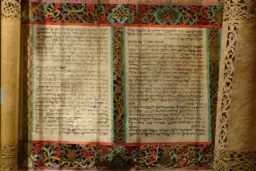
  • Detail of Lauder Haggadah

    In every Generation

    By Calev Ben-Dor

    The phrase “in every generation” appears in two different places in the Hagaddah, but with two very different meanings: “In every generation” they rise up to destroy us, and the Holy One, Blessed be He, delivers us from their hands. But we are also told that “in every generation” we are to liberate ourselves from slavery, which means that we’re also obligated to relieve ourselves of any hate, and fear, towards those who wronged us. Those two “in every generations” clash. Too much focus on one the first (our enemies) undermines our ability to do the second (overcoming hate). Emphasizing the second (no hate) may dull our senses to the reality of the first.
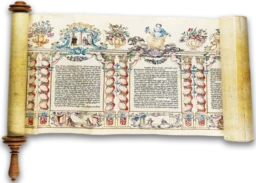

  • Scroll of Esther

    Purim – The Covenant Ratified in Exile

    By Yael Shahar

    The rabbis of the Talmud sought to anchor Purim in the Biblical tradition, with varying degrees of success. But one of the most striking rabbinic comments appears in a surprising place: in Massechet Shabbat, we find a curious reference to the events on which Purim is based: “'The Jews confirmed and accepted'—on that occasion they confirmed what they had accepted long before." What exactly, did the Jews living in the Persian exile accept?

  • Finding Meaning in the Book of Job

    By Calev Ben-Dor

    About nine years ago, the 929 project was launched. Similar to (but much easier than) Daf Yomi, individuals study one chapter of Tanach a day five days a week, completing the entire cycle in 929 days (3.5 years). Those engaged in it are currently learning the Book of Job, which offers us wisdom in these trying times. 

  • A House Divided – A warning for our time

    By Yael Shahar

    In this week’s parashah, Yaakov, now the head of a large family, heads home to the land of Canaan after living for two decades in the house of Lavan. During those years, he has gone from being an “innocent” tent-dweller to becoming a savvy man of business. Having deceived his father and stolen his elder brother’s blessing, he has been deceived in his turn, having been given the elder daughter in marriage before the beloved younger. He has come full circle. But there are hints that Yaakov has still to learn one crucial lesson: the price of fatherly favoritism.

  • The Merit of Isaac’s Ashes

    By Calev Ben-Dor

    The theme of ashes, (efer / עפר) plays a role in two stories in this week’s parsha. Abraham uses the term when entering into negotiation with God to spare the city of S’dom. The other mention of ashes is in the Akeida, where Abraham is commanded to take his beloved son Isaac to Mount Moriah and offer him as an olah, a burnt offering. The story not only fascinated traditional commentators but modern Israeli and Zionist thinkers too. What does this story mean for us today?

  • Lulav and Etrog

    Dancing over the Abyss

    By Yael Shahar

    While other holidays are said to be times of joy as well, Sukkot is singled out in particular by the Torah (D'varim 16:15): "You shall be altogether/only joyful." But can we ever be "only" joyful? Is there ever a time when we are completely without other emotional states? Is the Torah asking of us the impossible?

  • The Day after the Shabbat – What an ancient controversy teaches us about nation-building

    By Yael Shahar

    Shavuot is one of the three Pilgrimage Holidays mandated by the Torah, and yet the text tells us very little about the holiday or how it is to be observed. Even the date on which it is celebrated is left undefined, leading to intense debate among rival factions during the Second Temple era. In fact, this controversy was part of a much larger debate which threatened to split the Jewish nation along sectarian lines. The split hinged on a major difference of opinion over the nature of Jewish society and its foundation texts: Is the Torah a fixed text, unchangeable for all time, or is it a living document meant to be reinterpreted in the light of changing circumstances?

  • Parashat Midbar – Beyond the I-We Dichotomy

    By Yael Shahar

    Sefer BaMidbar is the story of a great test: Can the disparate tribes of Israel put into practice the lessons learned during the revelation at Sinai and the subsequent building of the Mishkan. Can they forge themselves into a nation capable of conquering their ancestral homeland and building a just and lasting society?

  • Wedding canopy in a sunny meadow

    Rabbi Akiva’s Time Capsule – The Song of Songs in Context

    By Yael Shahar

    Imagine that civilization was going to be destroyed within five years, and that you were tasked with deciding what literary treasures to preserve? That is the background of the Tanakh that we have today. The Talmud records the bare bones of discussions where scholars fought for the inclusion of those writings that were dear to them, often against ferocious opposition from their colleagues. Amazingly, of all the possible things to include, the famous Rabbi Akiva chose a collection of bawdy wedding songs! What lay behind such an odd choice?

  • Parashat Sh’mini – The Danger of Negating a Miracle

    By Yael Shahar

    Parashat Shmini: What was the crime of Nadav and Avihu, who were consumed by divine fire while offering incense? It turns out that by comparing this incident with a later one, in which Moshe strikes a rock to bring forth water, we can learn a lot about miracles, holiness, and leadership.

  • The Book of Esther as Political Critique

    By Yael Shahar

    While the Book of Esther bears all the literary marks of a fairy tale, the underlying themes are far from trivial: At what point does a ruler become unfit to rule? When is civil disobedience not only allowed, but imperative? Why continue to believe in social justice in a seemingly unjust universe?

  • Escaping the Luxury of Powerlessness: A cautionary tale

    By Calev Ben-Dor

    A curious midrash on the Megillah examines the attraction - and dangers - of exile. The powerlessness of exile can free us from the difficult moral decisions of sovereignty. But this freedom from guilt comes at the price of our ability to control our circumstances.