Announcing the Cardozo Academy Writers Guild!
Due to the war in Israel and other circumstances, I have asked Yael Shahar, the well-known author of Returning, and member of our Think Tank and Writer’s Guild to share with me the penning of the weekly Thoughts to Ponder Series. These essays are written in the spirit of the Cardozo Academy and with my full approval.
I thank her very much!
Nathan Lopes Cardozo
Last week’s parashah ended with the tribes of Israel settling in Goshen, having been given a holding (ahuzah) by Yosef:
| Israel settled in the country of Egypt, in the region of Goshen; they acquired holdings in it, and were fertile and increased greatly. | וַיֵּ֧שֶׁב יִשְׂרָאֵ֛ל בְּאֶ֥רֶץ מִצְרַ֖יִם בְּאֶ֣רֶץ גֹּ֑שֶׁן וַיֵּאָחֲז֣וּ בָ֔הּ וַיִּפְר֥וּ וַיִּרְבּ֖וּ מְאֹֽד׃ |
Although this sounds like a happy ending to the story of Yosef, the wording has an ominous ring to it: we recall that it was just this “fertility and increase” that is cited by the Egyptians several generations later as a reason to fear the budding nation of Israel.
Ominous too is the fact that in all of Egypt, only Yosef’s family seems to be prosperous. Yosef’s agrarian reforms have resulted in the nationalization of all farm land, the enslavement of the farmers, and the transfer of much of the population to the cities. If the prosperity of Yosef’s family earns the resentment of the native Egyptians, one can’t exactly blame them!
But this isn’t the only problem with Yosef’s plans. There is a sense that the family is getting altogether too settled in Egypt. By the end of Yaakov’s life, the famine has been over for 12 years, and the sons of Israel show no sign of going back to the land of Canaan. Yosef may be happy enough to have his family near him, but Yaakov has long known that the situation can’t last.
A promise to the future
And so, having been passive throughout the past few parshiyot, in our parashah, Yaakov once more steps up to guide his family. His first move is to take out an insurance policy:
| And when the time approached for Israel to die, he summoned his son Joseph and said to him, “Do me this favor, place your hand under my thigh as a pledge of your steadfast loyalty: please do not bury me in Egypt. | וַיִּקְרְב֣וּ יְמֵֽי־יִשְׂרָאֵ֘ל לָמוּת֒ וַיִּקְרָ֣א ׀ לִבְנ֣וֹ לְיוֹסֵ֗ף וַיֹּ֤אמֶר לוֹ֙ אִם־נָ֨א מָצָ֤אתִי חֵן֙ בְּעֵינֶ֔יךָ שִֽׂים־נָ֥א יָדְךָ֖ תַּ֣חַת יְרֵכִ֑י וְעָשִׂ֤יתָ עִמָּדִי֙ חֶ֣סֶד וֶאֱמֶ֔ת אַל־נָ֥א תִקְבְּרֵ֖נִי בְּמִצְרָֽיִם׃ |
This form of oath is significant; the last time we saw an oath preceded by “put your hand under my thigh” was when Avraham made his servant swear not to bring a wife for Yitzhak from Canaan, but rather, to go back to Avraham’s tribe in Haran. The form of this oath concerns the future in the form of progeny.
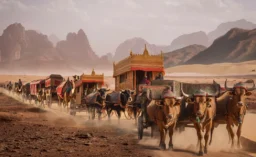
Likewise, Yaakov’s purpose is an attempt to ensure the future of his descendants by making sure that his progeny are rooted in the soil of Canaan. By returning to bury him in the cave that Avraham bought from Efron, Yaakov sets the scene for the magnificent funeral procession described in our parashah—a reminder to his sons of where they belong.
What’s more, each mention of the ancestral burial cave includes a detailed account of the sale of the land. This is the equivalent of exhibiting a bill of sale; it’s a conscious statement, meant to let the hearer know that the land in question is owned outright by Avraham and his descendants. This small plot of land is one that they can lay claim to unequivocally. Later on, Yosef himself will be buried in another such plot of land, in Shechem.[1]
An eternal holding
But this isn’t enough. For two decades, Yaakov has lived under the spectre of the dissolution of his family. Too late, he learned the price of his favoritism toward Rachel and her offspring. Now, his beloved Yosef, who he thought lost, has been returned to him. Or so he had hoped at first. But all too soon, it became evident that Yosef would not be returning to the family. He serves a new master now, and will not leave Pharaoh’s house.
And so Yaakov concocts what may be his most daring plot of all…
Some time after these things, it was told to Yosef “your father is ill”. So he took with him his two sons, Menashe and Ephraim.”
These two, it will be recalled, where born and raised in Egypt after Yosef’s rise to power. Born to an Egyptian noblewoman and raised in the Egyptian capital, they may never have met Yaakov in person. In fact, we don’t know when this encounter takes place. Coming on the heels of the announcement that Yaakov lived 17 years in Egypt, it is natural to assume that this and the previous event come at the close of Yaakov’s life.
However, given that Yosef is pictured as bringing the two boys out from between his knees, implying that they were still very young, we can infer that both encounters actually occurred many years before Yaakov’s death, when he was newly come to Egypt. By the time Yaakov died, the two boys could have been no younger than 19 years of age, certainly too old to be hiding behind their father! We recall also that upon his long-awaited meeting with Yosef, Yaakov said, “Now I have seen your face. Now I can die.”
In any event, the timing is less important than what Yaakov does.
Or rather, not Yaakov, but Israel! “When Yaakov was told, ‘Your son Yosef has come to see you,’ Yisrael summoned his strength and sat up in bed.”
He wastes no time letting Yosef know that there will be no permanent settlement in Egypt:
| Yaakov said to Yosef, “El Shaddai appeared to me at Luz in the land of Canaan, and He blessed me, and said to me, ‘I will make you fertile and numerous, making of you a community of peoples; and I will assign this land to your offspring to come for an everlasting holding (Ahuzat Olam).’ | וַיֹּ֤אמֶר יַעֲקֹב֙ אֶל־יוֹסֵ֔ף אֵ֥ל שַׁדַּ֛י נִרְאָֽה־אֵלַ֥י בְּל֖וּז בְּאֶ֣רֶץ כְּנָ֑עַן וַיְבָ֖רֶךְ אֹתִֽי׃ וַיֹּ֣אמֶר אֵלַ֗י הִנְנִ֤י מַפְרְךָ֙ וְהִרְבִּיתִ֔ךָ וּנְתַתִּ֖יךָ לִקְהַ֣ל עַמִּ֑ים וְנָ֨תַתִּ֜י אֶת־הָאָ֧רֶץ הַזֹּ֛את לְזַרְעֲךָ֥ אַחֲרֶ֖יךָ אֲחֻזַּ֥ת עוֹלָֽם׃ |
The hint could hardly be broader: You, Yosef, have given us a holding (ahuzah) in the land of Egypt, but God has given us the land of Canaan as an everlasting holding (Ahuzat Olam).
No one left behind
Yaakov’s next step is nothing short of shocking:
“And now, your two sons, who were born to you in the land of Egypt before I came to you in Egypt, shall be mine; Ephraim and Manasseh shall be mine no less than Reuven and Shimon. Any sons born to you after them shall be yours; they shall be recorded instead of their brothers in their inheritance.”
Yaakov doesn’t just adopt Yosef’s Egyptian-born sons, he takes them away from Yosef! In saying that any further sons born to Yosef will be called by the names of their brothers, Yaakov is effectively creating the legal fiction that the two of them are dead to Yosef, and will need to be remembered through the names of new sons born to him.[2] Yaakov is in effect saying: There will be no “Egyptian branch” of the family of Israel; we all belong in the land of Canaan!
What is startling about this is the lengths to which Yaakov will go to make sure that the family—all of it!—remains intact long enough to merit the eventual redemption. But more, he is making sure that Yosef, who may be lost to the family, will still have some continuity in the nation of Israel via his two sons.
And so, in two master strokes, Yaakov created a concrete reminder—both for his sons, and for us—that the future of the nation lies, not in Egypt, but in the Land of Israel. In making Yosef swear to bury him in the ancestral cave, he ensures that the tribes will have a common memory of their origins. And in taking Yosef’s Egyptian sons as his own, he ensures that there will in future be no “foreign branch” of the family, but only the one, united “Children of Israel”.
Yaakov knows that a nation can arise only once a place is found for all its disparate sectors and personalities. If he cannot, by himself, ensure the return of the family to the Promised Land, he can at least make sure they know the way home!
We forget these lessons at our peril.
Notes:
[1] The story of Avraham’s purchase of the Cave of Mahpelah is presented as a legal document. We know the name of the buyer and the seller, we know the price, and we know that there were witnesses to the transaction. Similarly, when Yaakov first returns from his time with Lavan, he buys a parcel of land in Shechem from the sons of Hamor, and again we are given the names and the purchase price. This occurs again when David buys the land for building the Temple. Ironically, Israel’s right to each of these three places is currently contested by much of the world.
[2] See for example, the story of Yehuda and Tamar (Genesis 38). Tamar’s first husband was Er, Yehuda’s eldest son. When Er dies without having sired children, Yehuda tells Er’s brother Onan: “Join with your brother’s wife and do your duty by her as a brother-in-law, and provide offspring for your brother.” The implication here is that the first son will be considered as if he was sired by Er, rather than Onan. This has legal implications in terms of inheritance rights. Onan’s crime was not “spilling his seed” as is often believed, but rather, cheating his brother of progeny. His was a crime against his brother’s future, and as punishment, his own future was cut off.

Yael Shahar
After an adventurous and unattributable career in security and intelligence, Yael Shahar now divides her time between writing about Jewish philosophy and learning Talmud with anyone who will sit still long enough. She is the author of Returning, a remarkable true story of spiritual resilience. Her writing on Jewish history and philosophy can be found at www.yaelshahar.com.