
Skip to content

Writer’s Guild

The Cardozo Academy Think Tank opens its doors to voices that probe, question, and illuminate. These essays reflect rigorous thought, spirited debate, and deep engagement with Torah and lived experience. Readers will find essays that challenge preconceptions, explore timeless themes, and make meaning out of the complexity of faith and culture.

  • Parashat Vayakhel – The Limits of Creation

    By Yael Shahar

    This week's parashah opens with an odd juxtaposition. Just before explaining to the Israelites how the Mishkan is to be constructed, Moshe pauses to exhort the people to sanctify the Shabbat. Why is the commandment of the Shabbat inserted here? The usual answer is that building the Mishkan—as important as it is—nevertheless does not over-ride the prohibition of work on Shabbat. But this only puts off the question: why are we are told to sanctify the Shabbat by ceasing all creative work on that day?

  • Parashat Tetzaveh – Amalek and Modern Antisemitism

    By Yehoshua Looks

    God has made two unconditional promises to the Jewish people: one that we are eternal, that we will not disappear; and the second that He will ultimately redeem us. Unfortunately, He has also warned us that a certain kind of irrational hatred will be our lot throughout the generations.

  • Parashat Mishpatim: The Power of Names

    By Yael Shahar

    This week’s parashah takes place in the midst of the dramatic ceremony of the Covenant at Sinai. The Israelites have accepted the terms and conditions and now stand poised to sign on the dotted line. Now comes the small print: the actual terms and conditions they are to keep. But there’s something very odd about the way the names of God come up in presenting these laws.... The names of God hint at the nature of law, causality, and justice.

  • When God is Mute – Interpretation and honesty in reading texts

    By Calev Ben-Dor

    Is it appropriate to sing God's praises, when God is utterly silent to our distress? Jewish tradition has addressed the question in different ways throughout history. Some of these answers may be helpful to us, living through a period that includes both unimaginable lows and historic highs.

  • Free Will and Confirmation Bias – A lesson for our times

    By Yael Shahar

    One of the more perplexing aspects of the Exodus story is the repeated “hardening” of Pharaoh’s heart. This phrase—together with another that is equally mysterious—is the key to understanding the true miracle of the Exodus. Virtually every encounter with Pharaoh involves a dialog between two key concepts: the hardening of the heart is paired with God’s showing Pharaoh, the Egyptians, or the Israelites “that I am Hashem.” Why is it so important that the Egyptians learn the mysterious name of God? Surely the primary target for this lesson would be the Israelites themselves! The solution to both questions is bound up in the true miracle of the Exodus—and it isn’t what we commonly think!

  • The Tragedy of Moshe Rabbenu’s Fight for Justice

    By Calev Ben-Dor

    Moshe was a warrior for justice. On three separate occasions, he fought for justice for others. He was simply unable stand idly by when he saw suffering. But this very inability to countenance injustice was also the source of Moshe's greatest tragedy.

  • Yaakov's funeral procession

    Knowing the Way Home – Yaakov’s high-stakes gamble

    By Yael Shahar

    What is behind Yaakov's sudden adoption of Yosef's two sons? And why does he make Yosef swear to bury him in the land of Canaan? Is his son's word not enough? It seems that Yaakov--or rather, Yisrael--is once more taking the helm of the family, and he is about to hatch his most daring plot of all!

  • A Light on the Threshold: The unwritten message of Hanukah

    By Yael Shahar

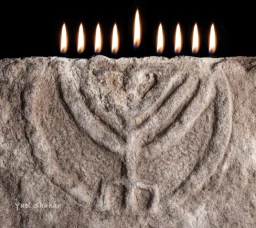
    To the question “What is Hanukkah?” the Talmud doesn't give us the answer we expect. We're told only that when the victorious Maccabees rededicated the Temple, the sole remaining jar of ritually pure olive oil for the menorah sufficed for eight days. Why no mention of the military victory over vastly superior forces and the resurrection of an independent Jewish state? Why does the Talmud leave so much out?

  • Dina

    The rape of Jacob’s daughter, the war of Israel’s sons

    By Yehoshua Looks

    Since October 7, all of the parshiot have had multiple meanings for our current situation. This week’s parshah, Vayishlach, in particular, is one that I’ve been dreading. It speaks directly to one excruciating element of our national pain from that day, and asks how we should respond to that pain.

  • Yaakov's ladder

    Yaacov’s Dream – The encounter with uncertainty

    By Yael Shahar

    In this week's parashah, Yaakov has his first vision of the God of his ancestors. It is significant that this encounter finds him in a state of vulnerability, a state of uncertainty. It is uncertainty that clears the way for us to accept the miracle of the encounter.

  • Avraham weeps for Sarah

    To our Friends outside the Land of Israel

    By Yehoshua Looks

    This week marks the Sloshim, 30 days since the massacres of October 7. The Jewish laws of mourning focus first on the dead, on dignity from death to burial. The focus then turns to the needs of the close relatives of the deceased, with Shiva, the seven days of intense mourning, to the Sloshim, which—with the exception of the death of one’s parents—marks the end of the mourning period. However, even 30 days later, we as a nation find it hard to get past the mourning.

  • Truth, Compromise, and Meta-Halakhah

    By Yael Shahar

    The Talmud manages to do what few legal systems even attempt: it integrates psychological and moral issues seamlessly with normative legal guidelines. But to appreciate the full extent of this integration, it's important to pay attention to something that is too often left out of today's Gemara classes: the aggadah.