
Skip to content

Parashat Yitro

Exodus 18:1-20:23

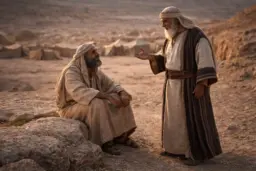
Moshe’ father-in-law offers practical wisdom about shared leadership, grounding the spiritual drama in human organization. The portion reaches its peak at Sinai, where God reveals the Ten Commandments to the entire nation. Yitro presents a vision of law as a sacred framework for freedom rather than its limitation.

  • A Challenge to All of Us

    Would You Decide to Become Jewish?

    In Parashat Yitro

    Yitro gave up power, honor, and certainty in his search for truth. But would we choose Judaism if we were not born into it? Yitro challenges both the religious and the secular to ask whether their Jewishness is inherited habit — or a courageous, ongoing choice.

  • Musical notes

    Bach, Mozart, and Beethoven: How to be a Genuine Halachic Expert

    In Halacha, Jewish Thought and Philosophy and Parashat Yitro

    To be an arbiter of Jewish law is to be the conductor of an orchestra. It is not coercion but persuasion that makes it possible for the other to hear the beauty of the music and to accept a halachic decision, just as one would willingly listen to the interpretation of a conductor—because one is deeply inspired.

  • Fundamentalism, Education and The Wisdom of the Gentile

    In Jewish Thought and Philosophy, Parashat HaShavua and Parashat Yitro

    By designating Yitro to be the father-in-law of the most holy Jew of all times, God made it clear that He would not tolerate racism and that a righteous gentile could climb up to the highest ranks of saintliness.

  • The Challenge of Yitro

    Would you convert?

    In Jewish Thought and Philosophy, Parashat HaShavua and Parashat Yitro

    Yitro confronts us for the first time with a new phenomenon: to be a Jew by choice. He presents all Jews with a major challenge: how to become a Jew by choice even when one has been born into the fold.

  • Racism and Gentile Wisdom

    In Parashat HaShavua and Parashat Yitro

    The Israelites' experience of slavery had made them utterly convinced that mankind at large was anti-Semitic. God therefore sent them a righteous gentile by the name of Yitro, to impress upon them that the non-Jewish world includes remarkable people, who not only possess much wisdom but actually love the people of Israel and contribute to Jewish life.

  • What makes a Legal Case a “Major” one?

    In Parashat HaShavua and Parashat Yitro

    What makes a legal case truly “major”? Is it the amount of money at stake — or the depth of moral and legal complexity it demands? In Parashat Yitro we see a subtle but radical change that Moshe makes to Yitro’s judicial reforms, revealing a vision of justice in which complexity, not power or wealth, determines what truly matters.