Thoughts to Ponder 902
An Open Letter from the “Rasha” to His Father
In The Jewish Year and Passover
Dear Dad,
As Pesach approaches, there is something important I need to say to you.
Every year at the Seder table, you call me a rasha—a wicked son. You speak of “blunting my teeth” and declare that had I lived in Egypt, I would not have been redeemed.
And this is all because I ask one simple question:
“What is this avoda (service) to you?” (Shemot 12:26)?
You assume that because I say “to you” and not “to me,” I have excluded myself from the Jewish people. That I no longer consider myself a Jew!
You seem very pleased with yourself, shaming me openly in front of our family and guests at the Seder table After all, you have been “zealous for the Lord”. And you have successfully put your son in his place!
There is only one problem. You have entirely misunderstood my question.
What I have really been asking, year after year, is this:
What does this evening mean to you, Dad?
Going Through the Motions
Do you know why you sit at the Seder table, read the story, and eat matza and maror? Are you truly engaged—or simply going through the motions?
I ask this because the rest of the year, your Judaism seems to me to be lukewarm, if not indifferent.
You sent me mixed messages throughout my childhood. Judaism was barely present at home. At my Bar Mitzva you were more concerned about what people would say about the fancy party you threw than about teaching me the meaning of what it is to be a Jew and why I am now a Bar Mitzva.
When I neglected my secular studies, you were annoyed—but when I neglected my Jewish studies, you were not. Instead you were more interested in me doing well in sports. After my Bar Mitzva you cancelled my Jewish studies all together because it got in the way of my other activities.
You have done everything to make Judaism irrelevant to me. But now you suddenly insist that I be present on Seder night and feel inspired. Why should I? For what purpose?
Questions You Never Answered
You told me I must marry a Jewish woman. But when I asked why, you had no answer.
And even now that we sit at the Seder table you rush through the Haggada because the meal matters more than the story. When I asked you a question about this fabulous story, you told me that it is “getting late”, that you would answer me at another time, but you never did.
Why?
Perhaps it is because you do not know.In fact, it seems you do not know why you are a Jew.
Every year you turn my question into an accusation because you are afraid of it. It is easier to label me a rasha than to confront your own uncertainty. But my question is not a rebellion—it is a plea.
The Exodus is not just a story. It is the story of all stories—one that has inspired nations, shaped moral consciousness, and sustained our people for millennia.
We Jews have made major contributions to nearly every human endeavor; from the Bible to Albert Einstein, from music to advanced mathematics! We may be less than one percent of humanity, but we have outlived all our enemies. After two thousand years of exile and persecution, we returned to our homeland and, in the blink of an eye, built a successful Jewish State. All of this is while we fight one defensive war after the other. All of this is completely miraculous.
Have you never thought about this?
So, I am asking you: What does this Pessah story mean to you? It would mean a lot to me if you had taken all this seriously and inspired me, but you didn’t, so why should I take it seriously now?
So Dad, since you haven’t answered me, I will instead answer you!
Discovering What You Did Not Teach
Lately, I have begun reading about Judaism on my own. I am discovering why I should be proud to be a Jew.
I had hoped you would teach me this. But you were too busy. Never once did I so much as see you reading a Jewish book. So I had to learn it from others. Even non-Jews have recognized what you never showed me. For example:
The Dalai Lama, Tibetan Spiritual Leader:
In our dialogue with Rabbis and Jewish scholars, the Tibetan people have learned about the secrets of Jewish spiritual survival in exile: one secret is the Passover Seder. Through it for 2000 years, even in very difficult times, Jewish people remember their liberation from slavery to freedom and this has brought you hope in times of difficulty.[1]
William Rees-Mogg, author and Chief Editor of The Times:
[Just as nuclear energy must be contained] the energy of the Jewish people has been enclosed in a different type of container, the law. That has acted as a bottle inside which the spiritual and intellectual energy could be held; only because it could be held has it been possible to make use of it. It has not merely exploded or been dispersed; it has been harnessed as a continuous power … [2]
Jean-Jacques Rousseau, Swiss/French philosopher:
The Jews provide us with an astonishing spectacle: the laws of Numa, Lycurgus, Solon are dead; the very much older laws of Moses are still alive. Athens, Sparta, Rome have perished and no longer have children left on earth; Zion, destroyed, has not lost its children…. What must be the strength of legislation capable of working such wonders, capable of braving conquests, dispersions, revolutions, exiles, capable of surviving the customs, laws, empire of all the nations…to last as long as the world?…any man whosoever he is, must acknowledge this as a unique marvel, the causes of which, divine or human, certainly deserve the study and admiration of the Sages, in preference to all that Greece and Rome offer.[3]
And David Ben Gurion, First Prime Minister of Israel:
“Three hundred years ago, there came to the New World a boat, and its name was the Mayflower. The Mayflower’s landing on Plymouth Rock was one of the great historical events in the history of England and in the history of America. But I would like to ask any Englishman sitting here on the commission, what day did the Mayflower leave port? What date was it? I’d like to ask the Americans: do they know what date the Mayflower left port in England? How many people were on the boat? Who were their leaders? What kind of food did they eat on the boat?
“More than 3300 years ago, long before the Mayflower, our people left Egypt, and every Jew in the world, wherever he is, knows what day they left. And he knows what food they ate. And we still eat that food every anniversary. And we know who our leader was. And we sit down and tell the story to our children and grandchildren in order to guarantee that it will never be forgotten. ….[4]
Who would not want to belong to such a tradition?
A Painful Truth
Don’t you think you should have shown me all this—rather than leaving it to others to teach me?
Dad, I love you. But I am deeply disappointed in you. A parent’s most important task is to educate his children. In this, you have failed.
So now I ask you: Am I truly the rasha? Or am I, perhaps, the chacham—the one who seeks understanding?
One day, I will invite you to my Seder. And then, perhaps, you will understand.
Your son,
The “Rasha”
Notes
[1] Roger Kamanetz, The Jew in the Lotus (HarperOne, 2007).
[2] William Rees-Mogg, The Reigning Error: The Crisis of World Inflation (London: Hamilton, 1974), 9–11.
[3] Jean-Jacques Rousseau, Cited in Leon Poliakov, The History of Anti-Semitism (Routledge and Kegan Paul, 1975), vol. 3:104–5.
[4] David Ben Gurion, Speech before the Peel Commission, 1936.
Questions to Ponder (for the Seder Table)
- Why do you think the “wicked son” asks his question in a way that sounds distancing? Is he rejecting, or is he responding to a failure of transmission between generations? Does this perspective change the way you think of people we often label as “wicked”?
- Have you ever asked a question that others misunderstood as criticism rather than curiosity?
- What part of the Seder feels most meaningful to you—and why?
Diving Deeper
The Haggadah tells us to “blunt his teeth”—but what if the real meaning of this phrase is not to silence the question, but to transform apparent rejection it into dialogue? How might this reflect a broader tension in Judaism between authority and authenticity?

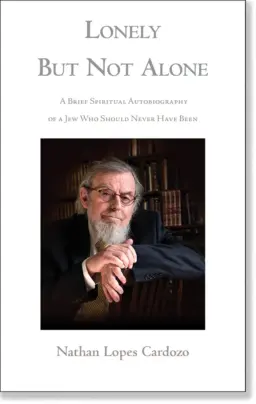
Rabbi Nathan Lopes Cardozo
Rabbi Dr. Nathan Lopes Cardozo is the Founder and Dean of the David Cardozo Academy and the Bet Midrash of Avraham Avinu in Jerusalem.
A sought-after lecturer on the international stage for both Jewish and non-Jewish audiences, Rabbi Cardozo is the author of 13 books and numerous articles in both English and Hebrew.
He heads a Think Tank focused on finding new Halachic and philosophical approaches to dealing with the crisis of religion and identity amongst Jews and the Jewish State of Israel.
Hailing from the Netherlands, Rabbi Cardozo is known for his original and often fearlessly controversial insights into Judaism. His ideas are widely debated on an international level on social media, blogs, books and other forums.