Never before has Halacha been so challenged as it is in our days, especially in Israel.
For nearly two thousand years, Jews lived under foreign rule and were thus able to play the role of what I call, “comfortable spectators.” They stood on the side while their host nations struggled with legal problems and moral crises. Throughout history these nations frequently looked for ways to increase the efficacy of their systems of government. So too, they often changed their positions about proper standards of morality.
Probably on more than a few occasions, Jewish citizens smiled when they saw how their host countries failed to enact and abide by sensible and ethical principles of justice. Jews saw themselves as wise men who, if the rulers of nations would only ask, could explain how to run things with much greater success.
True, many Jewish individuals served as advisors and ministers in many a gentile government, but as a nation the Jews never participated in operating a government. Under such circumstances it was relatively easy to criticize, and to convince oneself of one’s vastly superior wisdom. We were sure that if given the opportunity, we would do much better. We did not have a country of our own, and so we were able to hold on to our convictions without ever having to prove ourselves. This was indeed one of the very few luxuries granted to us in exile. We could easily criticize and smile while the gentile world struggled. We were comfortable spectators.
Since we returned to our homeland, everything has changed. Now we are no longer onlookers. Suddenly we became responsible for running a nation. Suddenly we were asked to create a legal system for our new state. Suddenly we had to do it for ourselves, and others were put in the position to smile from a distance.
To run a secular, but Jewish country is an almost impossible task. The idea alone is a contradiction in terms. Secular, but Jewish? The difficulties come from all sides, but one of the major obstacles no doubt arises from the fact that the purpose of secular law differs from that of Jewish Law.
Two great Jewish thinkers, living in two totally different worlds, made this point in an almost identical way. One was Rabbi Eliyahu Eliezer Dessler, the famous mashgiach ruchani, spiritual leader, of the Ponevezh Yeshiva in Bnei Brak, Israel, and the other was Professor Moshe Silberg, deputy member of Israel’s Supreme Court.
Both made the following observation:
Secular law is rights orientated, while Jewish law is duty orientated. While the main point in secular law is to defend and uphold the rights of the citizen, Halacha is a system that constantly emphasizes the moral and religious obligations of each man to his fellow and to his God. We see this philosophical stance in the fact that the Torah never expresses itself in terms of human rights but always in the form of obligations: “Thou shalt … and thou shalt not …”
This automatically creates tension between a modern, secular society and the Jewish ideal. Modern secular society sees its success in terms of making sure that its citizens are happy, and financially prosperous. It is in this that secular man hopes to find his dignity and his liberty. Not so in Judaism. Judaism sees man’s liberty and dignity in terms of his responsibilities. A man is a man, not because he does what he wants to do, but because he does what he oughtto do.
We could say this a little differently. The main task of secular law is to guarantee and uphold the concept of civilization—to make sure that people behave in a civilized manner. After all, this leads to the greatest levels of comfort and physical satisfaction for the greatest number of people.
But this is not the purpose of Halacha at all. Judaism is not interested in the civilized man per se. Judaism is the art of surpassing civilization. Judaism is interested in creating tzaddikim, righteous people. Its most central word is kedusha, holiness. Judaism sets man the task of becoming a holy being, not merely civilized.
I believe that this philosophical rift lies at the root of the conflict between the religious vision for the State of Israel, and the secular one. Is it at all possible to create an equilibrium between these two competing value systems? Or are they mutually exclusive? Rights vs. Obligations. Kedusha vs. Prosperity.
Can Halacha somehow function within a secular system that does not buy into its overall ideology? Does the Jewish Tradition provide guidance on how to introduce Halacha into a secular system in such a way that the latter slowly but surely incorporates more and more of its duty and kedusha-orientated ideology?
Above all: Does Halacha have a framework for initiating a step-by-step healing process that will bring its original ideology of kedusha back to the center of Jewish life? These are the issues with which future generations of Jewish thinkers and Halachic authorities will have to grapple. Their success will require courage, creativity, and most of all, an unusual amount of Yirath Shamayim—fear of Heaven.

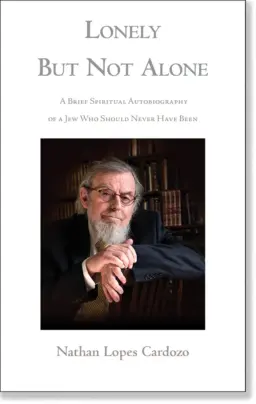
Rabbi Nathan Lopes Cardozo
Rabbi Dr. Nathan Lopes Cardozo is the Founder and Dean of the David Cardozo Academy and the Bet Midrash of Avraham Avinu in Jerusalem.
A sought-after lecturer on the international stage for both Jewish and non-Jewish audiences, Rabbi Cardozo is the author of 13 books and numerous articles in both English and Hebrew.
He heads a Think Tank focused on finding new Halachic and philosophical approaches to dealing with the crisis of religion and identity amongst Jews and the Jewish State of Israel.
Hailing from the Netherlands, Rabbi Cardozo is known for his original and often fearlessly controversial insights into Judaism. His ideas are widely debated on an international level on social media, blogs, books and other forums.