Thoughts to Ponder 901
Tolerance and the Obsession with Spinoza
In Abraham Isaac Kook and Baruch Spinoza
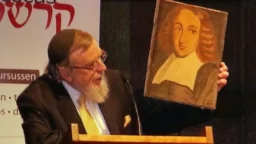
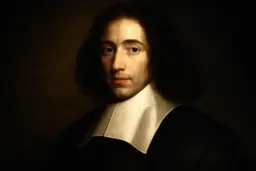
At the Symposium on the ban of Baruch Spinoza held at the University of Amsterdam in 2015, an event at which many famous philosophers and historians participated, I argued in favor of lifting the almost 400 year ban imposed by the Portuguese-Jewish community. I have never concealed my position on this matter. After all, Spinoza was a philosopher of exceptional stature. His thought profoundly influenced the course of modern philosophy, and his intellectual courage deserves recognition.
Moreover, we must be honest: the ban severely damaged the image of Judaism. It reduces the grandeur of Judaism to mere dogma and narrow mindedness.
The Dilemma of lifting the ban
But now, reflecting on my position, I am facing a dilemma. Would lifting the ban mean that Spinoza was therefore right? Would it imply that he was a model of tolerance? Or that his critique of Judaism reflected a deep understanding of the tradition he rejected?
Anyone who carefully reads his work knows that the answers to all these questions must be in the negative.
Spinoza liked to present himself as the philosopher of reason, the man who stood above all prejudice. But was that really the case? In the final chapter of his Theological-Political Treatise, he claims that women are not suited to engage in politics or to participate in national decision-making. This is no minor detail; it is a revealing example of a thinker who was himself not free of the very prejudices he so sharply criticized.
A traitor to his people?
Even more problematic is his attitude toward his own people.
Spinoza’s descriptions of Judaism reveal not only a remarkable lack of knowledge, but it is also clear that he was guilty of deliberate distortion. He applies a double standard and does great injustice to the richness and complexity of the Jewish tradition. Thinkers such as Emil Fackenheim (To Mend the World) and David Hartman (The Joy of Responsibility) have convincingly shown how selective and misleading his interpretations often are.
Even the great Kantian philosopher Hermann Cohen (1842–1918) went so far as to accuse Spinoza of fueling antisemitism and betraying his own people. That is a severe accusation. Can we simply ignore it?
The problem of pure reason
In addition to the above, we encounter an even more fundamental question. Spinoza’s entire philosophy rests on the primacy of reason. But what exactly is “reason”? And why should we accept it as the absolute standard of truth and reality?
The brilliant French philosopher and mathematician Blaise Pascal (1623-1662) formulated this problem with rare acuity: the highest function of reason is to recognize that there exists an infinity of things that surpasses it.
This assertion is not an expression of anti-intellectualism. On the contrary, it is intellectual honesty.
For on what basis does logical reasoning itself rest? To justify reason, we once again need reason. Thus we find ourselves caught in an endless loop from which we cannot escape. The foundation of our thinking turns out to be far less secure than we often assume.
That is why we must be extraordinarily cautious with any blind appeal to reason. History shows how often people have used reason as a pretext to create new dogmas. Fundamentalism, after all, is not exclusively a religious phenomenon. The secular world has its own forms of dogmatism. Secular fundamentalism can be just as intolerant as religious indoctrination—sometimes even more so.
Secular fundamentalism
And it is precisely here that we see a curious development among some admirers of Spinoza. They invoke his philosophy to justify their own secular lifestyle, without truly asking what Spinoza himself meant—or where his thinking may fall short.
It is also striking how little attention many Spinoza scholars pay to Jewish critiques of his work. At times, it seems as if such criticism is deliberately ignored—perhaps out of fear that it would require them to reconsider their own views on Judaism. Moreover, many simply lack sufficient knowledge of Hebrew to engage seriously with the traditional sources.
Thus, for example, the writings of Rav Avraham Yitzchak Kook—the phenomenal yet often controversial Chief Rabbi of Palestine (1865–1935)—remain largely unknown to many. And that is remarkable. Rav Kook did not so much see Spinoza as an opponent, but rather as a challenge. He believed that some of Spinoza’s ideas could undergo a process of refinement and ultimately be integrated into the intellectual universe of Chabad Hasidism.
Other Jewish thinkers, too, have subjected Spinoza’s philosophy to sharp critique—figures such as Leo Strauss (1899-1973), and the current Israeli philosopher and politician Yuval Steinitz. They would likely have little sympathy for my call to lift the ban. Perhaps they would argue that the rabbis of seventeenth-century Amsterdam understood—better than we do today—what was at stake.
History and irony
And yet, an intriguing irony remains.
One of the most prominent Spinoza experts of our time is an Orthodox Jew with a yeshiva background: Professor Yitzhak Y. Melamed of Johns Hopkins University. His eminence alone undermines the simplistic opposition between religion and philosophy so often assumed.
When Professor Melamed delivered a public lecture in Germany, he was attacked by a twenty-year-old man who hurled antisemitic slurs at him, struck him, and tore the kippah from his head; a grotesque scene—and at the same time a tragic reminder of how persistent antisemitism and fundamentalism can be.
Whatever one may think of Spinoza, the historical irony is difficult to deny: The Portuguese rabbis of seventeenth-century Amsterdam who excommunicated him likely contributed more to his worldwide fame than his philosophy alone ever could have.
Sometimes history is more ironic than philosophy.
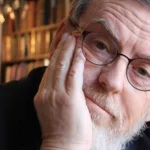
Rabbi Nathan Lopes Cardozo
Rabbi Dr. Nathan Lopes Cardozo is the Founder and Dean of the David Cardozo Academy and the Bet Midrash of Avraham Avinu in Jerusalem.
A sought-after lecturer on the international stage for both Jewish and non-Jewish audiences, Rabbi Cardozo is the author of 13 books and numerous articles in both English and Hebrew.
He heads a Think Tank focused on finding new Halachic and philosophical approaches to dealing with the crisis of religion and identity amongst Jews and the Jewish State of Israel.
Hailing from the Netherlands, Rabbi Cardozo is known for his original and often fearlessly controversial insights into Judaism. His ideas are widely debated on an international level on social media, blogs, books and other forums.